Iberia · Issue 01
Iberia Does Not Need Discovery. It Needs Understanding.
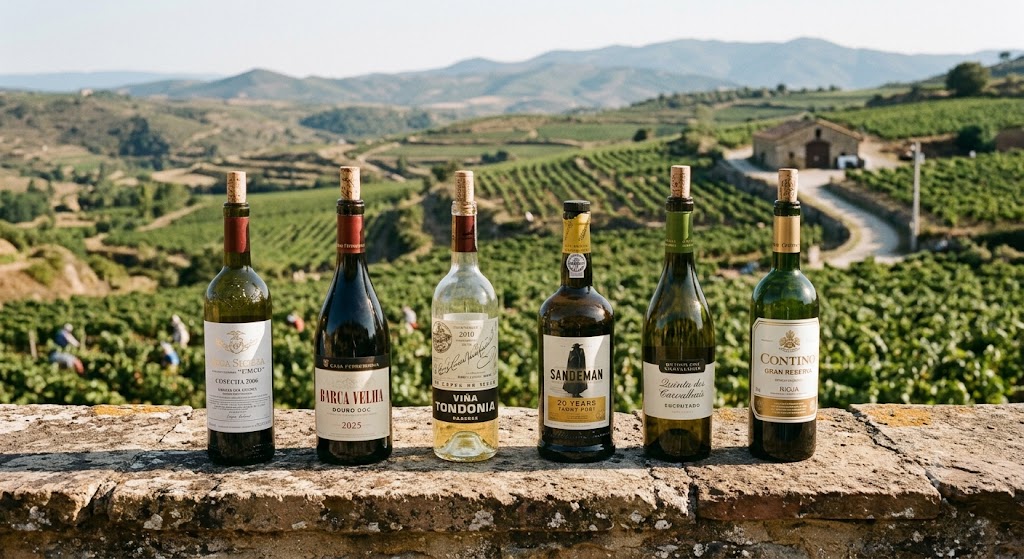
Portugal and Spain do not need to be discovered.
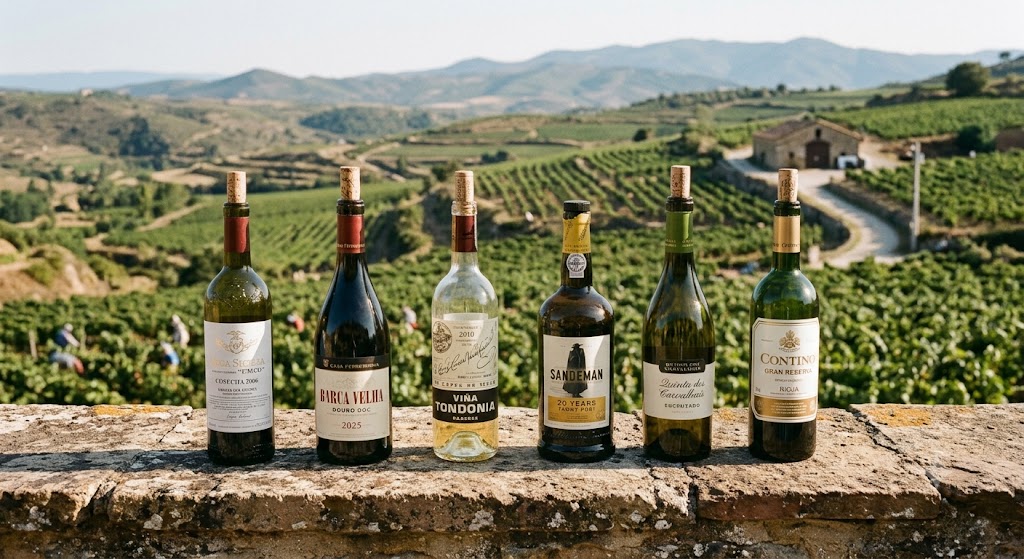
Portugal and Spain do not need to be discovered.
Let’s start there.
Wine people love the word “discovery”. Every year, there is a new hidden gem, a new underrated region, a new emerging country that has usually been making wine for centuries.
Portugal and Spain are often treated like that. I understand the intention, but I disagree with the language.
Portugal is not new. Spain is not new. Iberia is not sitting quietly in the corner of the wine world waiting for someone to notice it. These are two of the great historic wine cultures of the world. They shaped trade, food culture, hospitality, migration and global wine routes long before most modern wine markets knew what a wine list was.
So no, Portugal and Spain do not need discovery. They need understanding.
What is Iberia?
Today, the Iberian Peninsula is the southwestern corner of Europe, occupied mainly by Portugal and Spain. For this blog, my focus is Portugal and Spain: two countries, one peninsula, many wine cultures.
The name Iberia is ancient, linked to the Iberians and probably connected to the River Ebro, known in antiquity as Iber or Hiberus. Later, under Rome, much of the peninsula became Hispania.
So Iberia is not just a romantic wine word. It is geography, history, trade, food, wine and identity.
It is also one of the most complete climate stories in wine: Atlantic freshness, continental intensity, Mediterranean warmth and subtropical island viticulture in Madeira and the Canary Islands. That helps explain why the peninsula can produce saline whites, powerful reds, fresh mountain wines, fortified classics and volcanic island wines.
That is why I like the word Iberia. It gives us a frame bigger than one country.
The problem is not quality. The problem is context.
Outside Iberia, Portugal and Spain are often explained through shortcuts.
Spain becomes Rioja, Ribera del Duero, Albariño, Cava and Sherry. Portugal becomes Port, Vinho Verde, Douro reds, maybe Alentejo or Dão if the room is paying attention.
All of those names matter. Some are among the greatest wine styles and regions in the world. But they are not the full story. They are the entrance door, not the house.
And Iberia is a big house. Slightly chaotic, full of family arguments, old traditions, strong opinions, beautiful food, an extraordinary diversity of native grape varieties, and at least one uncle insisting his local wine is better than anything from the next village.
That is exactly why it is interesting.
Portugal and Spain are not simple wine countries. They are regional, emotional, historical and stubborn. They are shaped by Atlantic winds, Mediterranean heat, continental extremes, mountains, islands, rivers, old vines, native grapes, local food and local pride.
Think of Encruzado from Dão, Godello from Galicia, Baga from Bairrada or Listán Negro from the volcanic vineyards of the Canary Islands. These are not marketing curiosities. They are part of the real structure of Iberian wine.
This makes Iberia fascinating. It also makes it difficult to explain. And in the UK, where wine needs to be understood quickly, priced clearly and sold confidently, difficulty can become a commercial problem.
That is where the opportunity begins.
The numbers are not niche.
- 28.7M hlSpain’s 2025 production — 12.7% of the world’s wine
- 6.0M hlPortugal’s 2025 production — 2.6% of the world’s wine
- 62 litresWine per person aged 15+ each year in Portugal
Let’s kill another myth: Iberian wine is not small.
According to OIV data for 2025, Spain produced around 28.7 million hectolitres of wine, representing 12.7% of global production. Portugal produced around 6.0 million hectolitres, representing 2.6%. Together, Portugal and Spain represented more than 15% of global wine production.
That is not niche. That is global relevance.
Spain is a giant. In 2025, it exported around 19.6 million hectolitres of wine, worth around €3 billion. Portugal is smaller, of course, but smaller does not mean less serious. Portugal exported around 3.4 million hectolitres in 2025, worth around €1 billion.
Spain can move huge volume. Portugal has less wine to play with, but a strong value argument when the wines are properly explained.
Portugal should not try to win every battle on volume. That would be the wrong game. Portugal needs to win on identity, origin, food culture, quality and emotional connection.
In other words: value.
Portugal did not forget to export. It was busy drinking.
One of my favourite Portuguese truths is this: Portugal kept a lot of wine for itself.
And honestly, fair enough.
In 2025, Portugal produced around 6.0 million hectolitres of wine and consumed around 5.6 million hectolitres domestically. The numbers are not perfectly simple, but as a cultural signal this is huge.
Portugal is a country of just over 10 million people, and yet it has the highest wine consumption per capita among major wine-consuming countries: around 62 litres per person aged 15+, well ahead of France and Italy.
Portugal also welcomed around 32.5 million guests in 2025, many of whom eat, drink and discover Portuguese wine inside the country.
So when people ask why Portuguese wine has not been more visible internationally, part of me wants to say:
Because Portugal was drinking it — and invited a few guests to help.
A joke, but only slightly.
There is an old idea that Portugal kept the best wines for itself. Is that scientifically provable? No. But the spirit of the sentence is true. Wine in Portugal is not only a luxury product. It is part of the table. It belongs with food, family, conversation, argument, football, celebration and sometimes silence.
Portugal does not have unlimited wine waiting to be thrown into export markets. It has strong domestic demand, native grapes, old vineyards and a growing international reputation.
The challenge is volume. The opportunity is value.
“Wine in Portugal is not only a luxury product. It is part of the table.”
Tourism, tax and memory.
Tourism is one of Iberia’s strongest wine educators.
Spain welcomed around 96.8 million international visitors in 2025. Portugal also had a very strong tourism year, with around 32.5 million guests. Many visitors sit down, eat, order wine and create their first emotional connection with Iberia through Albariño/Alvarinho by the sea, Vinho Verde on a hot afternoon, Rioja with lamb, Douro red with steak, Dão at lunch or Sherry with tapas.
Because wine is not only liquid. Wine is memory.
Wine also feels different in Portugal and Spain than it does in Britain. Part of that is culture, food and sunshine. But part of it is tax.
In the UK, wine carries significant alcohol duty before VAT, shipping, margins and restaurant pricing. Since the UK moved to a more ABV-based duty system, alcohol strength matters even more commercially. Portugal and Spain have a very different wine culture and tax environment. Under EU rules, the minimum excise duty on wine can be zero, and countries such as Spain apply no excise duty to still wine.
VAT and costs still exist, of course, but the difference matters. Wine can remain closer to everyday life, without feeling like a luxury decision approved by a finance department.
Why I am writing this.
I am lucky enough to travel across the UK sharing Portuguese wines, and some Spanish wines too, with sommeliers, buyers, restaurants, wine shops and wine lovers.
From London to regional cities, from small tastings to trade dinners, I often see the same pattern: curiosity, surprise, then respect.
People are not rejecting Iberian wine. Most of the time, they simply have not been given enough context.
They have not been shown the map properly. They have not been told why the grape matters. They have not tasted the wine with the right food. They have not connected the bottle to the place, the producer, the history or the culture.
Without context, Iberia becomes a shelf of difficult names. With context, it becomes one of the most exciting wine stories in the world.
This blog is not blind patriotism. I am Portuguese, yes, and proudly so. But this is not about pretending everything from Iberia is automatically better.
It is about understanding: what Iberia means historically and today; why Portugal drinks so much of its own wine; why Spain can be both a bulk-wine powerhouse and a fine-wine country of serious depth; and why tourism, taxation, food habits, native grapes and regional identity all shape what people drink.
Portugal first, because it is where I come from and where my emotional connection is strongest. Spain alongside it, because you cannot talk seriously about Iberia and ignore the other half of the peninsula.
Over time, the conversation may travel further through the Portuguese- and Spanish-speaking wine world. But first, we start at home.
Iberia.
Portugal and Spain are not under-discovered. They are under-explained. And that difference matters.
The job now is not to shout louder. The job is to explain better.
That is what I want this blog to do.
One glass, one region, one grape, one producer and one uncomfortable opinion at a time.
Source note — Production, export and consumption figures are based on OIV 2025 data. Tourism figures are based on official Spanish and Portuguese tourism statistics. UK and EU tax references are based on official duty and excise guidance.
“Without context, Iberia becomes a shelf of difficult names. With context, it becomes one of the most exciting wine stories in the world.”