Wine History · Issue 01
From Ships to Wine Lists
How voyages, rivalry, disaster and reinvention created the wines we drink today
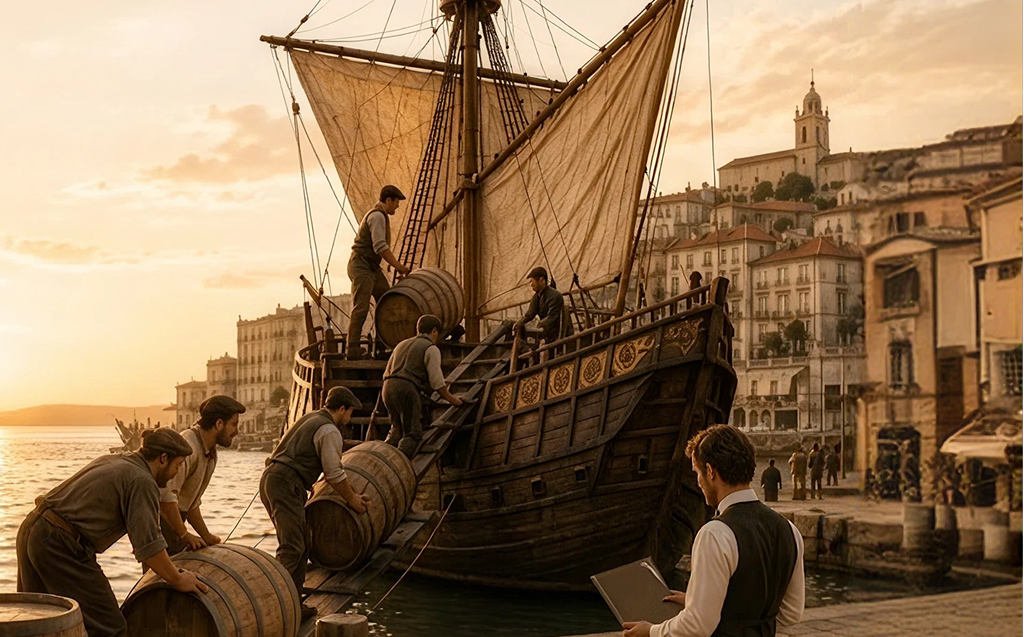
When wine travelled before labels
Ports helped decide which wines became famous long before appellations.
Jerez exported wine for centuries before Sherry became the style we recognise today. Its proximity to Seville and Cádiz placed it beside major routes towards the Americas.
From around the twelfth century, the Byzantine port of Monemvasia became associated with a sweet wine traded across Europe. Venetian merchants called it Malvasia; in France it became Malvoisie, in England Malmsey.
The name outlived the routes. Malvasia spread widely, while “Malmsey” survives as the traditional English name for Madeira’s sweetest style.
Ships did not only transport wine. They transported words
- 12th centuryAquitaine under the English Crown
- 1587Drake raids Cádiz
- 1703The Methuen Treaty
- 1773Woodhouse reaches Marsala
- 19th centuryThe wrong passenger comes aboard
- TodayBack to the wine list
When England discovered claret
After Aquitaine came under the English Crown in the twelfth century, Bordeaux developed a major trade with England. Merchants supplied claret, originally lighter in colour than the deep red Bordeaux we know today, and fleets sailed there to collect wine.
Before Bordeaux meant châteaux, classifications and investment portfolios, its port loaded wine for England.
Britain’s affection for claret began on the water.
Piracy makes Sherry fashionable
In 1587, Francis Drake attacked Cádiz and reportedly carried around 3,000 kegs of wine back to England. The Consejo Regulador of Jerez records the captured cargo as helping make the wines fashionable at court.
Wine histories say King James I later ordered the Royal Cellars to limit the court’s daily allowance of sack to twelve gallons. This referred to the royal household and guests, not twelve gallons for the king himself.
Shakespeare repeatedly mentions “sack”, the English term associated with Spanish wines. But England was drinking Portuguese wine too. In Henry VI, Part 2, one neighbour offers “a cup of sack”; another, “a cup of charneco”.
Charneco was associated with Bucelas, north of Lisbon, whose whites later became known in Britain as Portuguese or Lisbon Hock.
Before Port became Britain’s Portuguese wine obsession, Portugal was already on the English table.
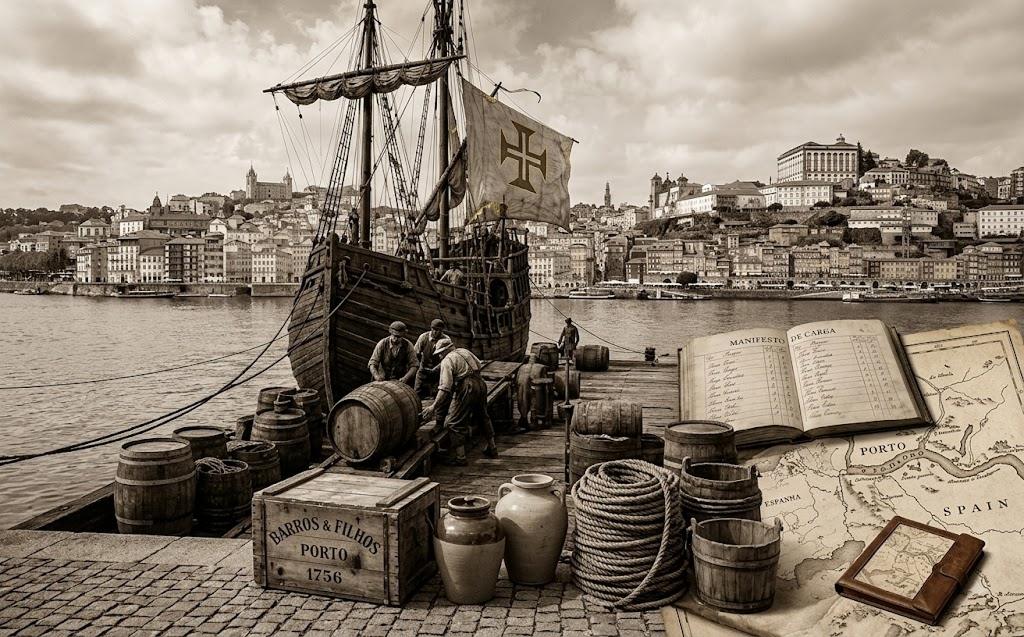
“Before Port became Britain’s Portuguese wine obsession, Portugal was already on the English table.”
When the voyage changed the wine
From the fifteenth century, Madeira and the Canaries became key stops linking Europe, Africa, the Americas and Asia.
Madeira produced one of wine history’s strangest discoveries. Barrels travelling through tropical heat and movement, conditions modern transport avoids, could return richer and more complex.
The practice became known as vinho da roda: wine sent through the tropics before returning to Madeira. Producers later developed ageing methods that recreated the influence of heat.
Port was shaped by the demands of trade. Madeira made the journey part of the wine.
Canary Malvasía became fashionable in Britain and northern Europe before commercial conditions weakened its markets. In Garachico in 1666, tensions around English influence culminated in the Derrame del Vino, when wine was destroyed in protest. In 1706, the Trevejo eruption devastated the town and buried its harbour.
Markets can disappear. Sometimes ports do too.
Port follows the market
The Methuen Treaty of 1703 gave Portuguese wines preferential access to the English market over French wine, reinforcing that trade.
Port developed through Douro vineyards, Portuguese production, merchants and demand.
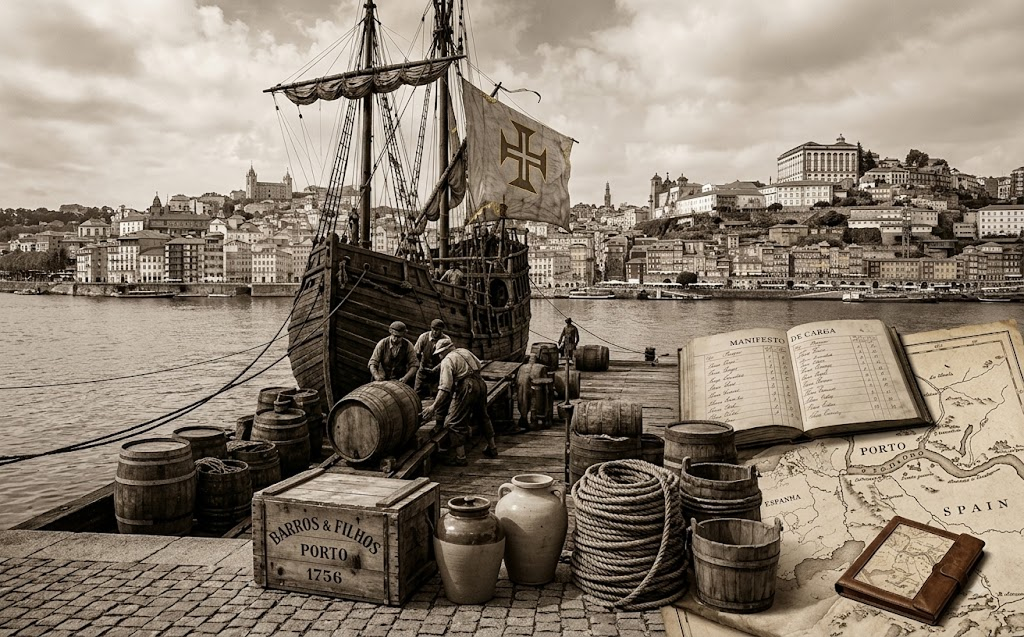
In 1756, the Douro was formally demarcated and regulated to protect quality and reputation. The timing is striking: less than a year earlier, the 1755 Lisbon earthquake had devastated the capital.
Protecting Port also meant defending one of Portugal’s most valuable exports, restoring confidence and bringing greater Portuguese control to a trade dominated by influential foreign merchants.
Crisis makes governments clear about which assets are worth protecting.
The Instituto dos Vinhos do Douro e Porto describes the Douro as the world’s oldest demarcated and regulated wine region.
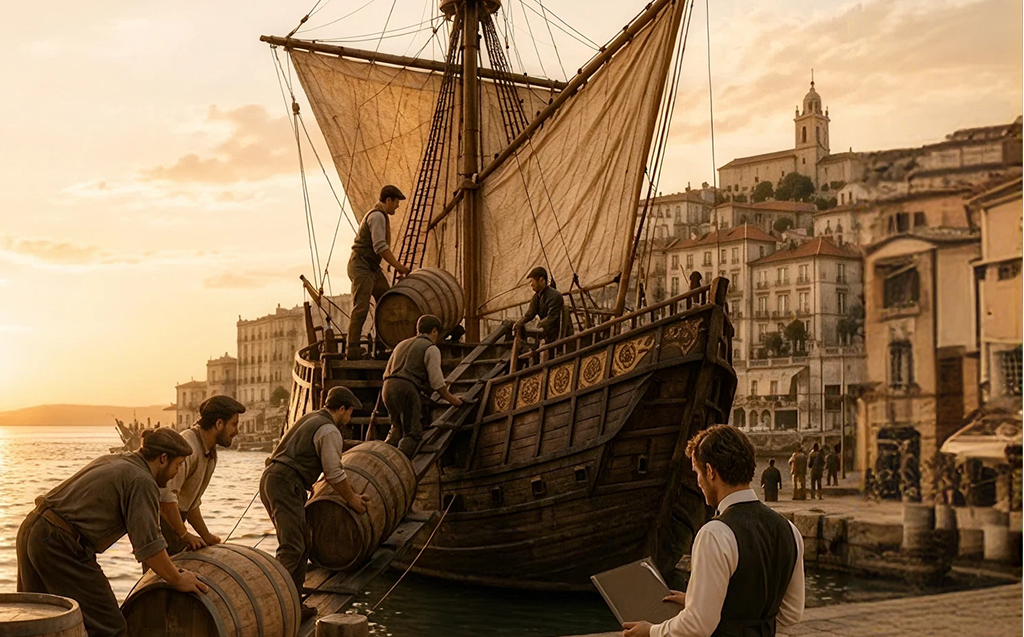
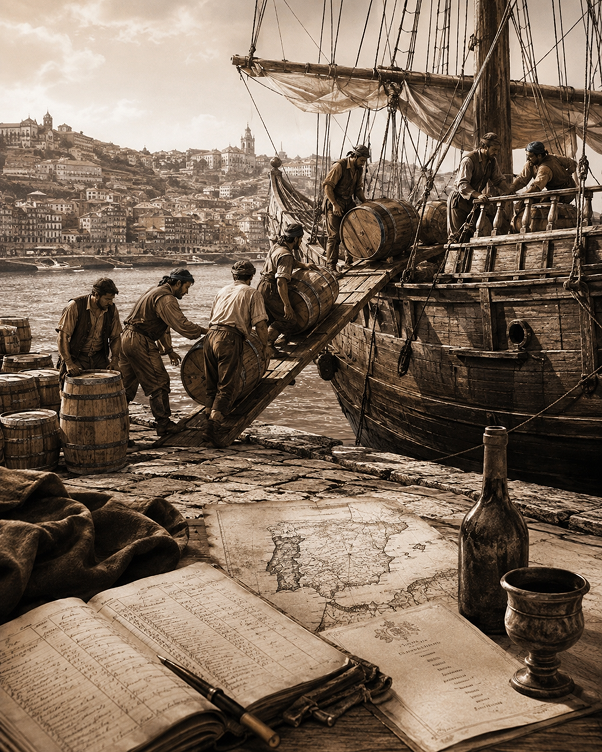
The grapes grew inland, but the wine’s international life depended on the Douro, travelling towards Porto and Vila Nova de Gaia and onwards by sea.
Sometimes the vineyard is inland, but the story still ends at a ship
The Sicilian wine that learned to speak English
In 1773, English merchant John Woodhouse arrived in western Sicily and encountered Marsala, a style that might appeal to British drinkers accustomed to Port, Madeira and Sherry.
He shipped barrels to England with added brandy, then returned to develop the business. Other British families followed. Vincenzo Florio established his Marsala cellars in 1833 and helped turn the wine into an international product.
Marsala fits perfectly: a local wine adapted for an international market and carried by sea to global recognition.
Wine history is rarely just about terroir. Customers can shape the product too.
When a German town became an English wine word
German wines travelled along one of Europe’s great trade arteries: the Rhine.
By the nineteenth century, Rhine and Mosel wines were prestigious in Britain. Hochheim am Main became Hock, and “hock” became a broader English term for German or Rhine white wine.
The linguistic echo is striking: Monemvasia became Malvasia, then Malmsey. Hochheim became Hock. Bucelas became Portuguese Hock.
Consumers were not simply discovering foreign wines. They were renaming them.
When the wrong passenger came aboard
By the nineteenth century, wine had travelled worldwide. Unfortunately, the ships carried more than wine.
Phylloxera, a tiny vine-root pest native to North America, most likely reached Europe on imported American vines. It devastated vineyards across the continent. European Vitis vinifera was ultimately saved by grafting it onto resistant American rootstocks.
Even remote islands were not necessarily safe.
On Pico in the Azores, growers enclosed vineyards with black basalt walls against Atlantic winds and salt spray. Their Verdelho gained international fame, travelling to England, the Americas and even the Russian tsars’ tables. But oidium and later phylloxera devastated much of Pico’s nineteenth-century wine economy. Today, its vineyard landscape is a UNESCO World Heritage Site.
Elsewhere, geography created remarkable exceptions.
At Colares near Lisbon, vines planted in deep coastal sands remained on their own roots while phylloxera devastated vineyards elsewhere.
The sea that made viticulture difficult also helped preserve it.
The Canary Islands escaped Europe’s nineteenth-century phylloxera disaster, preserving ungrafted vines and local varieties. Then, in July 2025, phylloxera was detected in Tenerife for the first time. In 2026, authorities carried out 4,435 inspections. Tenerife remained the only Canary Island where it had been detected.
Isolation protected the Canaries for generations.
Not forever.
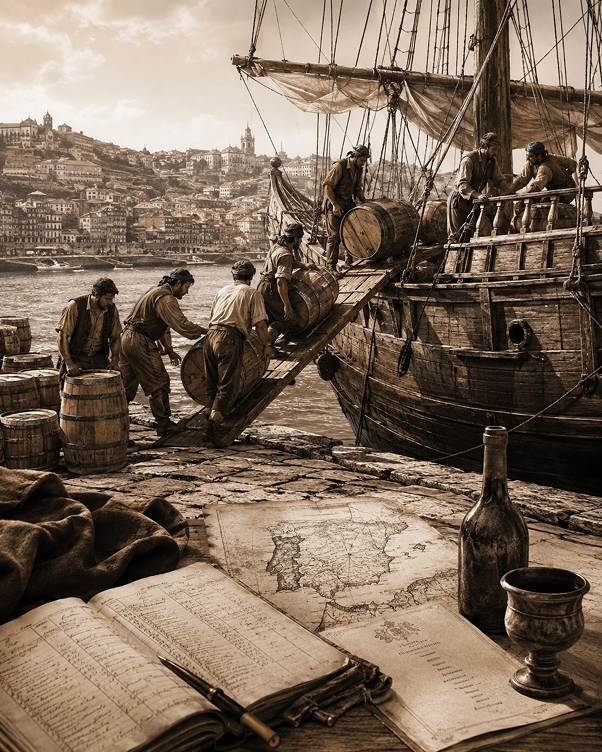
The Atlantic wines change again
The ships became faster. Markets became global. Wine changed again.
Even Bordeaux was not always the red-wine region we imagine. As recently as the 1970s, the Bordeaux appellation produced more white wine than red. Red came to dominate its image, but dry Bordeaux whites are receiving renewed attention, with production reviving in parts of the region.
Further north, the Loire shows how geography shaped wine trade. For centuries, the river carried wine towards Nantes and the Atlantic, where Dutch merchants connected vineyards with northern European markets. After the devastating winter of 1709, plantings of Melon de Bourgogne expanded around Nantes; it became the grape behind Muscadet.
The river did not simply run through the vineyards. It connected them to the world.
Portugal’s northwest also transformed. In the historic Minho landscape, the Vinho Verde DO is now overwhelmingly associated with white wine, yet reds once played a much greater role. White grapes were already established, and Alvarinho had long been rooted around Monção and Melgaço.
During the twentieth century, viticulture, winemaking and tastes turned Vinho Verde into one of Portugal’s most successful sources of fresh Atlantic white wine.
Cross the Minho River into Galicia and Alvarinho becomes Albariño. There, DO Rías Baixas, formally established in 1988, transformed the grape into an international name.
But this is not simply a Spanish grape with a Portuguese translation. Alvarinho and Albariño belong to a shared Atlantic wine culture on both sides of the river. Today producers use lees ageing, barrels, longer maturation and single-vineyard expressions to show the grape can offer far more than simple young seaside wine.
Bordeaux is rediscovering its whites. The Loire used its river to reach the Atlantic. Vinho Verde changed colour in the world’s imagination. Alvarinho and Albariño remind us that wine culture rarely fits neatly inside a political border.
The wines changed. The routes remained.
Back to the wine list
And that is how centuries of disorder arrive on a clean restaurant page.
Malvasia remembers Venetian merchants. Bordeaux remembers claret sailing north. Sherry carries English demand and one spectacular theft. Madeira made travel part of its identity. Port followed the Douro to the Atlantic. Marsala shows how merchants can transform a local wine. Hock proves that sometimes even the name travelled.
Pico shows that isolation did not guarantee survival. Colares and, for generations, the Canaries show the opposite: geography could sometimes protect vines. The Loire connected vineyards to markets. Vinho Verde and Bordeaux changed colour in the world’s imagination. Alvarinho and Albariño show how wine culture extends beyond borders.
So next time these wines appear in perfectly ordered rows, remember what the list leaves out.
The ships were not always safe.The markets were not always open.The names were not always the same.The vines did not all survive.
The wine did.
“The ships were not always safe. The markets were not always open. The names were not always the same. The vines did not all survive. The wine did.”